Sunday, January 1, 2017

War Stories from the Perspective of a Belgian Girl

My mother will be 89 years old in less than 2 weeks.  She's had a lot of medical battles the past few years.  She is such a treasure to all of us in my family.  She has often mesmerized us with her stories. I truly believe her generation is the greatest. They grew up in difficult times and learned how to be survivors.  Here is some of her story...

My mother was born in 1928 in the Belgian Congo (Zaire, Africa).  Her father,  was employed with Caltex.  Her mother gave birth to my mother two months early, after falling off the back of a motorcycle in the jungle.  She weighed 2 pounds and had to be kept warm by the stove (no incubators back then). My mother had a 7 year old brother.  By the time she was two years old, the family left Africa and moved back to Liege Belgium because my mother was suffering from Jungle Fever and would not survive if she remained in the jungle climate of Zaire. Miraculously, she had survived premature birth and serious illness. 

They lived in an apartment in the city of Liege.  Mother attended a girl's school and lived a typical European city life.  Then World War 2 broke out.  Belgium was one of the first countries occupied by the Germans.  She tells stories of blacking out windows to avoid air raids and bombings, rationed foods, falling bombs, and life under the occupation.  She was a young teen at the time.  Here are some of her stories.

What the Cat Dragged In...
        Rationing.  Everything was rationed from hosiery to food.  Instead of hose, the girls drew lines on the back of their legs, for that's what hose looked like in those days.  Coffee was replaced with chicory. When you went to the meat market, you never bought a rabbit without its head attached. Otherwise, you might find yourself eating a cat.  They lived on the fifth floor of an apartment building with a meat market on the ground floor. They received a special treat once, courtesy of their cat. They had not had meat in a long time and she prayed for some meat. One night they heard a noise on the stairway: clump, clump, clump, clump.  When they went to see what the noise was they found their cat dragging a ham up 5 flights of stairs.  Sadly for the cat, they grabbed the ham, cleaned it off and feasted.  

Her Father had a Sixth Sense...
        My grandfather had an uncanny sense about danger which saved their lives many times.  Once they were walking along in the countryside and sat on a bench to rest.  After a short time, my grandfather said they needed to go.  They found a shop with a bomb shelter when the bombs began falling.  The dust was so thick everyone in the shelter was dipping handkerchiefs into milk and holding it over their mouths and noses so they could breathe.  When they emerged from the shelter, the bench upon which my mother and her father had been sitting was gone... a bomb had landed directly on the bench.
        Another time when this sixth sense saved them was on their way to Paris.  Many believed the Germans would never make it to Paris so many evacuated to Paris.  My mother and her father were walking to Paris from Liege.  My grandmother stayed behind to care for her mother.  They found themselves walking along among a group of American soldiers.  The soldiers invited them to ride in the back of one of the trucks.  They rode along for a little while when suddenly my grandfather said it was time for them to go.  They got off the truck and set off in another direction on their own.  Not long after they heard the hum of the airplanes and the guns of the German's strafing the road they had  been traveling on.  

Underground Army....
        Belgium was a neutral nation and conquered early on.  However, it had an underground army that fought actively against their occupiers.  Both my grandfather and my uncle were part of this army.  As a result they were also wanted by the Gestapo.  To avoid  being taken by the Gestapo, my grandfather volunteered to go work in a German factory (to escape suspicion and to carry out activities of the underground). He tried to blow up the factory but was unsuccessful.  Many Belgians were conscripted and forced to work in the factories.  Often they would try to sabotage the bombs or steal munitions.  While working in Germany, my grandfather assisted in helping two French officers escape Germany.  He was awarded a French medal for his action.  When in Germany, they were forced to "Heil Hitler" and every time he uttered in French "Hitler is a pig".  After about a week the Germans sent him back to Belgium because they thought he was crazy.   
        At one point, his mission was to deliver or receive a secret message.  He was told to wait at a certain streetcar until the last one left.  If the messenger had not arrived, he was to leave.  He waited and waited until the last car was pulling away.  He ran to catch the streetcar but lost his footing and slipped under the car.  He lost his leg.  The artificial leg worked in his favor several times in dealings with the German military...
        Her brother, Roger, was also in the Underground Army.  He worked in a munitions factory and stole parts of weapons to deliver to the Underground and assemble.  Two of his companions were arrested after he had already left the factory.  The Gestapo showed up at my mother's home looking for him.   He escaped just before they arrived.  My mother remained composed while the Gestapo played with his gun in front of the 13 year old girl questioning her as to where her brother could be found.  She said she did not know.  They searched the house.  When they went into the room of my grandfather, he had his artificial leg laying out.  The German office looked in and saw my one legged grandfather sitting on the bed; he said my grandfather did not need to get up as it looked okay and they did not need to search the room.  My grandfather was relieved after they left because he had a gun under the bed.  My mother and grandfather later wrapped up the gun and threw it in the river.  My uncle made his way to his grandparents home where my mother met him and walked him out of town to a bus past the German checkpoints.  He went to stay with an uncle in another town.  

                
Paris....
         After my mother and her father got to Paris, it was not long before the Germans invaded.  All of the children in Paris were boarded on trains and sent out to the countryside to escape the city and live with farmers.  My mother was separated from her father for several months living with a host family. Once the children were returned to their parents, she had to stay several more weeks until they found her family.  
      

Healing... 
      The scars of living under occupation and witnessing atrocities run deep.  My mom saw many evil things.  Her grandmother hid three Jewish girls in her home until they were able to be taken into a convent for hiding.  They knew bad things were happening to people. All through my childhood I recall my mother getting upset during war movies and she would begin using various negative expletives in French when she saw Nazis or SS.  One of her friends just shared this insight with me.  Betty VanderLinden writes:  "I gave her the book The Hiding Place by Corrie Ten Boom. I hope you have read it! It was also a movie . Anyway, your mom said she stayed awake all night reading that book! She hated the Germans so much but she decided if the author could forgive them, she could too! I think she said she cried a lot in doing so but it was a good thing for her!"  I remember my mother telling me: "I don't hate Germans anymore, just Nazis."

June 21, 2017 Update:

We lost my dear mother on June 10, 2017.  I cannot begin to describe to you the hole it leaves in our lives and in our hearts.  I only wish I had done more to document her rich legacy...

2017

Happy New Year!

Wow, I see I only had 2 posts in 2016.  Well, no resolutions for 2017 but maybe I will post more this year.  I am planning some changes to my business that will hopefully reduce my stress and cure my semi-burnt out state.  So check back from time to time and see what 2017 brings!

Thursday, April 28, 2016

TPT Store

When I set up this blog several years ago, I linked  it to my old email account.  Then I sort of forgot about that account.  I stopped using it because at one point it had been hacked.  A couple of weeks ago I logged into it and was surprised to see over 1000 requests to share links to my self made materials linked to blog posts.  At some point Google Docs converted to a new format and apparently many of my docs  did not convert properly.  So, since I have to go through some effort to re-establish links and fix my docs, I decided that I would put them on TPT.  Hopefully this will be a more permanent and reliable storage solution and it seems a bit easier to access.  I will be working over the next few months, as time allows, to fix my docs and place them in my store.  There will be a small fee for items to compensate my time, but I will also try to place a few things in for free.  So please be patient as I work on these and if there is something you are trying to access, check back from time to time to see if it is available.  I will post links to the item in my TPT store as they become available.


Friday, February 26, 2016

Hoarding

                                                      
Over the years I have had several clients on the Autism Spectrum who have a problem with collecting things and refusing to get rid of them.  Some examples:

  • A child who printed out pictures from her computer and refused to throw them away. Problem: using costly ink  cartridges up very quickly and hoards of paper everywhere.
  • A child who papered her walls with drawings and any scrap of paper she liked. Problem: obvious?
  • A child who kept objects because they have memories for him. Problem: too much junk and too much emotion in keeping his "things".
So what's to be done.  First, it involves a gradual process of downsizing.  Mass cleaning would be traumatic for these children.  My recommendation  is to scale things back in degrees over time. 
  • First, begin a dialogue with the child (if he is able to do this).  Explain that you understand these things  are special.  Show the child your method of holding on to special things you do not want to forget (photo albums, pinterest boards, computer files, flash drive).  
  • Create a social story about holding onto memories, not things. The story can also discuss the peace that comes from order and organization (only achieved by culling out things).  Review this story daily with the child for a week or two so he/she can internalize the ideas.
  • Start with the least special items. Or, choose the least conspicuous area (a remote corner of the room or an area not of current interest or value). Tell the child, "We are going to do what our story talks about. Let's choose one area (or 5 things) that we can take pictures of.  
  • Snap photos of the items.  At this point, based on what your child needs, you can download the pics to the computer and either print them out to put in a photo book or save them to a picture file.  If your child loves the ipad, this would be an excellent way to store the photos.  The child can then see that the loved items are always accessible to him and they are now portable.  This might also become a good way to help the child self soothe when in stressful situations out in the public.   
  • For the child who hoards pictures or papers, start by making binders of them.  Or take a picture of the wall with the pictures to save on the computer.  Perhaps you could buy 10 simple frames to use for special items and arrange these on one wall in a nice display.  Then the child can change out pictures in these 10 frames when new pictures are found.  Create a social story that states only 10 items can be on the wall and they must be in these frames.  
  • Pack the actual items away in a box after the photo is taken.  If your child is okay with getting rid of the item, do so.  If that's still too hard, place the box in an inaccessible location such as the attic.  Your child may need time to adjust to the idea and be comforted knowing the  item is nearby.  But, don't  let your child talk you into getting it back.  When he thinks about it, refer him to the picture.  
  • Help your child write memories down about the item, if that helps.  You can create stories about the items.  This is a great way to practice language skills and writing skills. 
  • Continue this process over several weeks slowly culling and removing the clutter from your child's room (or your home). 
  • Over time, the hope is that you will be able to donate the items or throw away the excess papers since they are no longer such a strong attachment to your child. 
Here is an example of a social story: 

I have lots of stuff in my room.  
I like my stuff.  They hold memories for me. They make me feel happy.
When I get new things, I am not sure where to put them.  Because I have too much stuff.
Too much stuff makes the room look messy.  Sometimes I can't find something.  Or since there is so much stuff, I am not sure what to look at first.  

Too much stuff can be bad.
It makes a room messy.
It makes people feel confused when they can't find things they need.
It makes them feel stressed 
It makes keeping the room clean and healthy a difficult job.

I need to keep the things I use everyday: my clothes, my furniture, my...
I can keep 10 things I love the best to look at.
The other things I like, need to be stored away so that my room is not messy and unhealthy.
If I think I will miss something, I can take a picture of it so I can look it whenever I want to.  Pictures are not messy as long as I keep them in my book or on my computer/ipad.
I will give away the things that are not special to me anymore. Someone else might need it.
I will carefully pack away the things I feel I need to keep. First I will take a picture to save the memory.
The box will be put in the attic.  I know where it is but I should not try to get it down.
When I want to see the item in the box, I will pull out the picture of it and think about it.
I will find the 10 things I love the most and will keep those in my room.  
When I find a new thing I love, I will need pack up something old so my new thing will have a place to go. 

Things can be nice but things don't stay around forever.  My memories are always with me, in my head.  If I am afraid I will forget something, the pictures will help me remember. 

You can create a similar story  that specifies your problem, correct thinking regarding the problem, and the solution.

Why a social story? Because they work.  Kids with ASD like rules and tend to follow them. However, the rules often need to be their own internalized thinking. The social story is a script or rule of expectations.  Rehearse it frequently with the child so that he/she can internalize these ideas and allow them to become a new 'rule' for them.  For most children, adding pictures to the story is immensely helpful to help them visualize (thinking in pictures).

*Disclaimer: This is just a general idea on how to begin to address a  hoarding problem.  These problems can be more complex and may require the assistance of a psychologist or other mental health professional.  Use your discretion and knowledge of your child's needs when devising an individualized approach.

Wednesday, July 8, 2015

Inside Out by Disney Pixar

This week I decided to take my social groups to see Inside Out, the new Disney Pixar movie.  I am currently running four groups this summer consisting of 3-4 children per group.  Since this movie deals with emotions it seems like a "no-brainer" that it would be beneficial for social groups.  The moment I saw the trailers I thought "Aha! That's what we are doing this month."   I use Michelle Winner's Social Thinking curriculum (R).  Her Super Flex (R) curriculum is all about villains and a social super hero in your brain helping you make good choices.  So the idea of little emotions in your brain dovetails nicely with this type of teaching.  I know there are differences of opinion on the movie.  Michelle's recent blog touches on some of the differences of opinion concerning the precepts of this movie. Click here to see her blog.

After seeing the movie (several times), I feel there is value in it.  The emotion characters display great visuals of facial expression, body language, and tone of voice.  Recognizing  the role of "sadness" as helpful validates the idea that all emotions are necessary and no one emotion should  rule over everything.  There are deep lessons about how growing up also means letting go of childish things, even if it hurts a little (or a lot).

We spent last week going over hidden rules of the movie experience covering everything from standing in lines, concessions, choosing seats, watching quietly, being mindful of others, and exiting the movie theater.  This week I am meeting the groups at the theater to apply all that was discussed last week.  I have told parents that they are welcome to attend with siblings but asked them to sit apart from the group.  My reasoning for this is that group dynamics differ from family dynamics. Having a parent sit with them would likely influence behaviors externally versus intrinsic or self-controlled behaviors.  The goal is that one day, when they are old enough, they will go to the movies with their friends and know how to behave appropriately.  We have also discussed peer pressure; if your friends are misbehaving that does not mean you need to misbehave also.

The next couple of weeks, we will delve into the movie details.  First I will check for comprehension.  I have found that many children with social disorders fail to follow the story line and the rationale for the various experiences. I have had them tell me fractured details of a movie or story with no idea how those events fit together to form the plot.  Next we will discuss the various emotions and their characteristics.  We will discuss the importance of the various emotions.  We will validate the benefits of feeling sad, angry, fearful, etc.  But we will also stress the importance of  not camping out or getting stuck in those feelings.  It should be interesting!

Friday, February 27, 2015

Wordless Books: The Bountiful Benefits

"Wordless books". When I first heard the term I couldn't help but think it was contradictory; like an oxymoron (jumbo shrimp, pretty ugly, working vacation...).

Wordless books contain no words or very few words and tell a story through pictures.  

Here are some of my favorites: Link to photo file

These books are wonderful resources for work on language skills and for social skills training. Here are some general ideas.

For speech or language impaired children, oftentimes they only need help with expressing ideas.  If they already know how to "read" scenes and interpret them, then we can focus on the expression of those ideas:
  • Verbal expression: Have the child look at the pictures and tell the story in his own words.
  • Written expression: The child writes sentences to match the page. Or, older children can write an entire story to go with the pictures.
  • Answer questions about the scenes.
  • Ask questions about the scenes.
  • Inference: What can we infer based on the pictures?
For children with social pragmatic disorders, we need to help them learn to "read" the scenes.  We can do this by asking specific questions while pointing out things that lead to correct answers. The skills areas often weak with these children include the following:
  • Gestalt processing: Figure out what is going on by observing the whole picture.
  • Coherence: Link the interpretation of each page in relation to what was happening on the previous page (rather than interpreting each page at face value/as a new thought).
  • Emotional understanding: Observe the facial expressions to help interpret or to assign emotional states to characters (thus making more accurate interpretations).
  • Prior knowledge: try to recall personal experiences with the scenes/situations/feelings
  • Inference based on our prior experiences/knowledge.

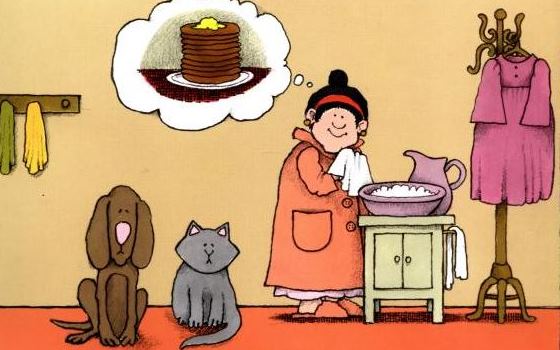
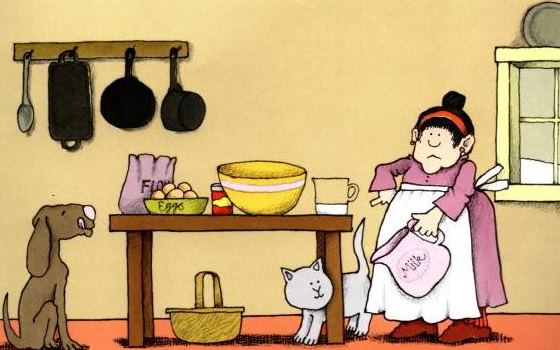
Pancakes for Breakfast

This is a great book for language skills since it provides a sequence of events that can be used to tell a story from beginning to end. It is also excellent for social pragmatic language due to its use of thought bubbles to show what the character's intentions are; although many things go wrong in her plans. It is better to "guide" a child into making his own correct discoveries rather than "telling" him what is going on.  By guiding him with questions and pointing out things he may have missed, we teach him to sharpen his own observation skills and thinking processes.  Plus we all learn by doing so much more efficiently than we learn by being told. 

  • What time of day? The woman has on a robe and is washing her face so it is either morning or night just before going to bed. (Interpretation/gestalt processing)
  • What is she thinking about? Pancakes. Why? 
  • When do we usually have pancakes? Breakfast. (prior knowledge)
  • If she is thinking about eating breakfast, then what time of day is it? Morning.
  • What will she do next: cook pancakes or get dressed? (Sequential processing/personal knowledge)
  • What do you do first in the morning?
  • Do you think she likes animals? She has a cat and dog so she probably does.(Inference) 
  • How does she feel right now? Happy. How do we know this? She is smiling. (Reading emotions)
  • How does she feel here? Sad. (Emotional understanding).
  • What are other emotions she might be feeling? Disappointed
  • What is wrong? Based on the previous pages: she has run out of something. (Identifying a problem)
  • What does she need now? Milk. 
  • Why do you think this? She is holding the pitcher in her hand and the cup only has a little milk. (Problem Solving)
  • How do you think she will get more? go to the store.  
  • She lives on a farm. What is another way she can get milk?  Milk the cow. (Alternate Solutions - Flexible thinking)

a boy, a dog, and a frog


This book shows the story of a boy who goes to the pond with his dog one day. They get try to catch a frog who outsmarts them.  However, when they go home wet and disappointed, the frog is lonely and decides to follow them home. This book is great for retelling for language skills due to a sequential storyline.  It is also great for social pragmatics. Some to the social areas that can be drawn out it include:
  • Emotion Reading: Facial expressions on boy, dog, and frog
  • Eye gaze: what is the boy looking at? What is he thinking/planning?
  • Prediction: What will happen next?
  • Inference: Why does he feel this way? How did the frog feel about the boy trying to catch him? Afraid, mad, happy.  Since he followed him home, he must have liked the boy. 
The Snowman

This is the story of a boy who builds a snowman that comes alive at night and becomes his friend.  The boy shares his home with the Snowman who then reciprocates and shows the boy his world. It is great for the following skills:
  • Reading scenes and making correct interpretations.
  • Use of Eyes: What's the boy looking at? What's he thinking about? Social Thinking (R) Concept of what we look at is generally what we are thinking about.
  • Inference: The snowman is afraid of the stove. Why? 
  • Reading emotional states.
  • Friendship

Sunday, January 26, 2014

Winter Revisted

Snowman_06.jpg

This winter I am revisiting my old posts for therapy ideas and I am updating them with links to other SLP posts and Pinterest ideas. I am trying to give proper credit as I make these additions: I provide a link to the original post so please be sure to click on those links so you can see the wonderful sites with all of the creative ideas.  These posts are primarily a place where I can catalog sites for quick reference when I need to find them.  Follow this link to see my previous Winter posts.

Saturday, December 7, 2013

Santa Mouse

Santa Mouse is a classic Christmas book about a little mouse who decides to give Santa a gift of his most prized cheese. Santa is so touched by the little mouse's gift that he names the mouse "Santa Mouse" and lets him come along on his sleigh. The end of the book encourages children to leave a piece of cheese in the tree for Santa Mouse and in turn he leaves a small present hidden in the Christmas.  This has become part of the Christmas tradition for many families.  There is a second book called Santa Mouse, Where Are You?  One year, I used this book with all of my clients and gave each of them a mouse ornament. Oriental Trading had some nice ones reasonably priced in bulk.  Or the kids can do a craft activity making a mouse or a fake piece of cheese (hanging real cheese in a tree could become a stinky tradition, especially if the cheese falls or sticks to the tree).

Here is a youtube animation of the story.

This book can be used in therapy in many ways: using the story to pull our articulation targets, language goals, and extension activities.

Articulation: Obviously this is a great book for /s/ targets: Santa, Mouse, Christmas... but any sound can be targeted with a little creativity by pulling target words out of the story or using carrier phrases with the specific target.

Language: 
  • Vocabulary: discuss new words as they are used in the story. Example: Mouse's imaginary friends
  • Concepts: Locations - Use mouse and cheese cut outs to place in various positions on a Christmas tree picture. This can be done as a receptive or expressive language activity. 
  • Sentence structures:  Develop sentences to target whatever sentence structure to be practiced.  Make a mini book for the child and glue these sentences to each page.  You can also cut up the sentences and have children unscramble them.
  • Verbal Expression: Re-telling the story.
  • Comprehension / Inferences: Discuss whether the "friends" are real or imaginary.  It is amazing that many children miss this concept or fail to fully understand it.
  • Social: Discuss how the mouse feels "lonely" with no friends, how thoughtful he is to want to give Santa his cheese, how his behavior makes Santa feel happy, which results in Santa befriending him.
Crafts are always fun to do and great for working on following directions and processing information.  Or, you can just use them as a motivational activity with the child earning pieces of the craft to complete it. 


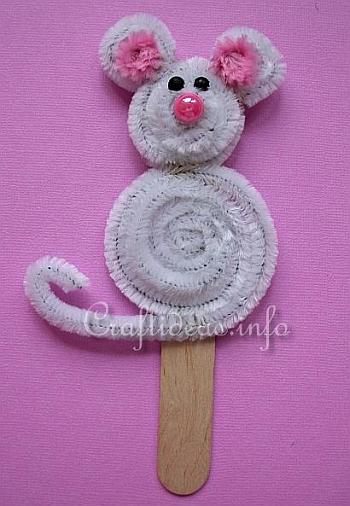
  • Cheese and pom pom mouse: Cut a small triangle from a yellow sponge for the wedge of cheese.Glue a grey pom pom to the sponge for the mouse's body.Cut a nose, ears, and eyes from felt or foam, (or use wiggle eyes). Glue them in place.For the mouse's tail, cut a 2-inch strip of chenille stick or felt. Glue one end under the back of the mouse's body. 


Cute Original Ornament Sweet Felted #Mouse and #Cheese by amazingowl on Etsy, $30.00 #craftsPaper Ornament Crafts: Merry Mouse Ornament - Another good cone-shaped ornament.  :)Chenille Mouse on a Popsicle Stick        
  
I have uploaded a couple of documents:
                       

Saturday, April 20, 2013

Advice to new SLPs: ATTITUDE

This blog post is dedicated to the many young SLPs and Assistant SLPs out there just starting up their careers.

You have your basic education (whether it be at the Bachelor's level or Master's level), now comes the time for the "real" education. Don't get me wrong, your academic education is vital. But, as we all know, the real learning comes in the application of the knowledge and transforming the knowledge into a real skill.

Here are some very basic suggestions that I give to new SLPs who work for me.  These suggestions are from the perspective of an SLP working with children but most are applicable across settings and clients.

Attitude with child/client & parents - attitude is important; try to be...

• Cheerful – Always look happy to see the kids and parents: People want to feel you are personally interested and invested in them.  If you looked bored, uninterested, or distracted, they will not develop much confidence in you as their therapist.

• Animated – With kids you need to use animated expressions to hold their interests and have Fun! Even if you feel horrible, you have to act happy.  This may not always be possible, but you should do your best to breathe life into your therapy sessions.  On the flip side, don't go over the top and appear fake or contrived.  Also, animated does not mean "loud".  Some children respond better to a calm therapist (especially hypersensitive kids).  You can be animated and calm at the same time by using facial expressions that show excitement about what the child is doing.

• Positive and encouraging – This suggestion can be applied in several ways: 
  1. Condition/Diagnosis: Even if you suspect something is really wrong, choose your words carefully.  Bad news is best broken sensitively and giving parents time to process the information.  If I suspect a child has Autism, I will mention "red flags for a developmental disorder" and recommend the parent goes to see a specialist who can diagnosis what is going on with the child.  This gives them time to digest the information, often coming up with the suspected diagnosis on their own. The only thing worse than "dropping a bomb" on a parent ("I think your child is Autistic.") is giving them the wrong information.  Developmental delays in young children can be something other than what we initially think they are. 
  2. Corrections: When a child makes errors, do not be overly critical. If they miss something, you say “Great try. Let’s do it again.” Do not say, “No, that was wrong. Do it again.”  Don't focus solely on taking data and marking errors.  Remember that the goal is to make them successful and it is your job to get them there.
  3. Behavior: Often you will see kids who have behavioral problems or who act out for a variety of reasons. (see blog post: Behavior) When you visit with the parents, don't stand there and report every negative behavior their child committed.  When that child is with you, it is your job to figure out how to achieve cooperation; that is a big part of our job.  If you must enlist the help of the parent, do it in a constructive way, not a destructive way.  Parents of difficult children already know their child is a "handful".  They will be highly appreciative of a therapist who can see their child's positive qualities (every child has some, you just may have to look extra hard to find them).  Be sure to point out the good things the child does.  When you speak of the behavioral problems, address them in terms of "how we can help the child" versus just complaining about the child.  (Think in terms of "informing vs. tattling").
• Confidence – always act like you know what you are doing and present an air of confidence, especially with parents. Know why you are doing what you are doing in case they ask. If you do not know an answer to their questions you can say, “I will need to look into that and get back with you on it.  If you don't understand or trust what you are doing, the parent won't trust you either. In order to be confident you will need to spend time preparing for each session and learning or reviewing information.

Monday, March 25, 2013

The Gruffalo & Social Skills

I admit I just saw the great post at playingwithwords365.com about speech and language activities to use with one of my favorite books, The Gruffalo. Be sure to hop over to the link and read her post... it is full of great ideas.  At the end of the post I saw a "blog hop".  I did not know what this was so I checked it out.  It is a place to link blog posts of a similar subject.  Since I love this book, I thought, "I want to be part of that!"  I checked out the posts and most of them discuss this book or other books by Julia Donaldson.  But, none of them seemed to touch on the "social thinking (R)" aspect of this story.  This was one of my favorite applications of this story. 
                                          
Spoiler Alert: Reading this post will give away the story, if you have not yet read it.

The story follows a little mouse who is approached by several predators while walking through the woods. This is no ordinary mouse, he is a very witty mouse who saves himself from becoming someone's dinner by using some clever tricks.  This story can be used to teach the following social skills sets:
  • Understanding the Perspectives of others: Mouse knows the others are thinking of "eating" him since they are natural predators. This idea can be used to address making "smart guesses" and using our brains to think about what we already know about things (prior learning).
  • Deception: He rightly interprets their invitations to dinner as being deceptive ways of getting him to their homes. You may need to discuss this with the student to see if they understand this idea that though the animals say "for dinner" they mean as the "main course", not as a guest.  (Multiple meanings/Hidden intentions). So many of our kids with social skills disorders are gullible or naive.  This might be a good way of introducing "stranger danger" or helping them to learn that some people might be deceptive for one reason or another (bullies).  They can learn to think about what they already know and make better assumptions about motives.
  • Problem solving skills:  Mouse taps into his prior knowledge or experiences (what he told the others about the Gruffalo and how they will react to seeing him) in order to escape being the Gruffalo's sandwich.
  • Theory of Mind: This reminds me of the Sally Anne test; who knows what? 
         What does Mouse know? (That Snake wants to eat him).
         Does Snake know that Mouse knows he wants to eat him?  (no)
         How do you know this?  (If he did, he would not believe the Gruffalo story).
         What does Mouse know that Gruffalo doesn't? (animals are afraid of Gruffalo)
         What does Gruffalo think, that is not true? (He thinks they are afraid of Mouse).
         Why does he think this? (Mouse told him they were & the animals run away).    

Other Speech Therapy Goals:
  1. Color the Gruffalo:  This page can be used to process information from the story by recalling the colors of the Gruffalo parts or to follow instructions in coloring the page.
  2. Story Sequencing/Story Telling with pics from many of the resources.
  3. Learning descriptive words: wobbly, prickly... & other vocabulary: warts, tusks...
On-Line Resources:

The official Gruffalo website: Interactive games, free cards to print, mask, finger puppets, recipes...

Itsy Bitsy Learners Preschool Pack: alphabet, numbers, cards...

tes connect: A teacher share site from the UK, where this book originates.  Click the link and it will take you to a wealth of book activities and worksheets.  You must join the site to access materials but it is free. Here a few of my favorites from this site:

Sunday, March 24, 2013

Emails: Permission to Share

I have two email accounts. My gmail account is rarely used since it got hacked awhile back and spammed a lot of people.  Apparently it is the account linked to this blog...

I checked it the other day for the first time in a very long time and found several email requests to share materials from this blog site.  So, I have posted a message to the right giving permission to do so.  I am happy for anything here to be used as long as given proper credit.  This can be done in several ways.  Here are two ways I generally use:   add the source's name and blog site or post as a link back to the original site (this also serves to drive traffic to that site). 

Saturday, February 9, 2013

REVIEW: Social Skill Builder App

I was honored to have been invited to review this app. I had already been using the Lite version and had purchased two of the additional modules, so I was very happy  for the opportunity to get access to the full version.  This app puts appropriate clips of video modeling examples literally at your fingertips: iPad => fingertips! :-).  There are four settings in these apps: preschool, elementary, middle & high school, and community.  In the LITE version ($2.99) there is one module for each setting.  More modules can be purchased for $1.99 each.  The FULL version ($12.99), comes with all 10 of the currently available modules.  Future modules will be $1.99 additional purchases.  The idea of being able to purchase modules individually is an attractive option for someone who does not want to plop down $60-90 for a full app or piece of software.

What I like about this app: It gives good examples of expected and unexpected behaviors that commonly occur in these settings.  Each module presents various clips of situations (Table Talk - cafeteria scenes, etc.) that are likely to occur in that setting.  Each clip is followed by 1-2 questions to check for understanding of the concepts.  A reinforcer is played for correct answers.  The reinforcers are appropriate for young kids. Each module displays various problems, examples, and expectations that might occur in that setting.

I have used these modules in working with both individual clients and in some of my small social groups.  We watch a clip, answer the questions, and often will launch out into further discussion of our own experiences with similar situations.  The clips fit nicely with social skills training ideas.  I look forward to new modules, I am sure I will be purchasing them all.  It is a great and easily accessible resource.  It is not terribly expensive. Everyone likes those kinds of resources!

Here is a link to the website for more details: Social Skill Builder App

Sunday, February 3, 2013

Bullying, Teasing, or Social Skill Deficit?

I had an interesting experience in a group this week that has left me processing and problem solving all weekend.  I had a group of three upper middle school teens who meet infrequently, it has been several months since our last meeting.  One of the students, who I thought was doing well generally, made a series of unkind remarks to one of the others; these two had been grouped together formerly. The remarks included: "we don't like each other, why are you stuttering, you are stuttering again" along with some inappropriate laughter. Though the student being referred to did not appear to take offense, it was clear that the remarks increased the stuttering behavior and made the student uncomfortable.

My first response was to "shoot daggers with my eyes" at the student making the remark the first time (not surprisingly, this made no impact whatsoever).  My next response was to quickly verbally reprimand the student: "that is a very inappropriate thing to say...".  My third response was to shut down the conversation and deliver a mini-lecture on the importance of not teasing or making negative remarks about others.  The offender took offense at being reprimanded and became defensive.  The offendee seemed unphased by any of it.  After the session, I spoke with the offendee and  mom to apologize for the incident and to vow I would speak with the other student to get this behavior under control.

Here is the background: Both  have Asperger's.  Both tend to enjoy the sarcastic side of humor.  Both like to get attention, usually in a sarcastic manner. Although, the offendee was behaving this day.

The Offendee did not seem phased by the remarks, except for having more trouble being fluent.  Although it was "said" it did not bother the Offendee but it clearly affected the speech.

The Offender tends to say what is thought.  What was the motivation behind the remarks?
  • Desire to "one-up" the other and be "on top" socially with a new member in the group.
  • Dislike of the other student with no attempt to hide it.
  • Maliciousness, bullying
  • Genuine curiosity about why the student stutters and inability to censor  words into a respectful dialogue or to understand that one must filter ones comments. (This did not appear to me to be genuine curiosity... but I could be wrong as it is often to tell with these kids what is really going on).
My dilemma:  How to approach this issue?

Did I ever say these groups were easy?  They are most definitely the hardest thing I have ever done...

My plan:  In our individual session, I will bring this incident up for discussion.  We will do a Social Behavior Map (from Michelle Winner's Social Thinking) and dissect the Offendee's responses to the situation.  I also found a helpful tool at Jill Kuzma's site: Analyzing a Teasing Situation and Types of Teasing Flowchart.  We will use these to try and help the Offender process the effect of words.  Then we will discuss what is not appropriate in commenting to others and the difference between harmless teasing and harmful teasing. I pinned some resources on my Pinterest Board for Social Skills that might help guide this discussion: Understanding Playful Vs. Hurtful Teasing, Teens Talk about Bullying, Normal Conflict vs. Bullying. This last link seems to be for younger kids but it might help illustrate the point of Hurtful Words and how they cannot be taken back: It involves crumpling a picture for each hurtful remark and then illustrating that even when we try to remove the hurt (straighten out the paper) the scars (wrinkles) remain.


We will see how it goes... If anyone has other suggestions, I would be happy to hear and consider them.

from Blog Hoppin'

Friday, January 11, 2013

SNOW... SNOWMEN...

Winter is here... although it was near 70 degrees today in Tyler.  However, we actually had snow on Christmas day for the first time that I can remember in East Texas.  I am sure it has happened before but it is RARE.  Nice thing about snow in this part of the world is that is only lasts a day or two and then it goes away.  Just enough to make it fun and magical but not troublesome.


The office is all decorated in snowflakes, icicles, and snowmen... a contradiction to what the weather is like outside.  So my thoughts turn to winter themes.  I will try to not repeat my previous posts: Fun Winter Books & Let It Snow.

I have discovered a few new crafts this year that I hope to try, mostly thanks to Pinterest:

 http://whatsfuntoday.blogspot.com/2012/01/doily-snowmen.html


New Books (new to me anyway):

Snow Globe Family:  This book is about a family living in a snow globe (that mirrors the family in the book).  The snow globe sits on a shelf ignored by all in the big house except for the baby.  The little family (in the snow globe) longs for someone to shake the globe and create a hill for sledding.  Finally the baby gets the globe and shakes it for them.  It has plenty of snow related activities in the book: snowmen, snowballs, snow angels... But more interesting is that it can launch the discussion of "what if I were in the snow globe".  My plan is to use the clear plate snow globe activity and have the kids draw a picture on blue paper of themselves (pictures) in the globe.  Another variation on the craft would be to glue two clear plates together with a snow scene inside.  I will address any goals the kids may have in therapy: articulation, language, grammar, sentence structure, written expression, story telling, etc. This activity is particularly suited to verb tenses. 

It is also a good activity for those working on Social Thinking (Michelle Garcia Winner) activities involving "wondering" about things (developing curiousity, speculation, empathy).  It can also be an activity on "perspective" and "empathy". 
  • How would the world look to someone in a snow globe?
  • What would it feel like to be in the globe?
  • How did the family feel when the baby shook the globe?  Were they afraid? Why not?"                                         

Snowmen at Night:  This book examines the secret life of Snowmen, who come alive at night and have all sorts of fun adventures.   Crafts: any snowman craft would be great.  There are tons of snowmen crafts.  Just pick your favorites: paper plate, dough, cotton balls in bottles, white paint, snow paint (shaving cream and paint), floam, doilies, marshmallows.... Crafts are great activities for following directions, verbal expression, processing, etc.


This book would be great for launching more perspective taking discussions:
  • What does the boy see in the morning? (disheveled snowman)
  • Does he know what happened to the snowman? (no, it happened when he was sleeping)
  • What might the boy be thinking?
  • What might the snowman be thinking? 
  • How do the snowmen feel?
  • What else could the snowmen do?
  • Do you think snowmen should be drinking hot chocolate? Why/why not? What else could they drink? (milkshakes because they are cold...)

Monday, January 7, 2013

Behavior Management 101: Topic 6

Topic 6: Behavior Management:
Social Skills Groups

In my small groups, which are social skills groups, I see from 2-6 students at a time.  Since these kids are there for social skills issues, behavior management is a primary focus.  I rely on the work of Michelle Garcia Winner and her Social Thinking curriculum.  I use a combination of the before mentioned approaches including a heavy dose of fun and humor.  An invaluable tool has been the use of her approach which I call "Thought Marbles" because I use marbles instead of sticks.  Since this post is a day late and I have already written a post on this subject, I will simply post a link to that article: Thought Marbles.


Saturday, January 5, 2013

Behavior Management 101: Topic 5

Topic 5: Behavior Management: Give the Child Some Decision-Making Power

We all know that anytime we are "invested" in something, we work harder at it.  I use this principle in my private practice.  If I have a family who cannot afford services/copayments, I rarely waive them completely.  I realize that if the family is having to pay $5-10 dollars per visit, they have an investment in the process and will work harder to follow through on practice and recommendations.  If I invest my time, energy, or money in a project, I will take a greater interest in it.  And so on...

Well, the same is true of our clients/students.  If we give them ownership in the process, they will be more engaged in it.  If they are engaged in it, they will work for success; although their definition of success may not match ours.  We want achievement of goals, they may also want this but they will most likely have shorter goals such as earning a reward or play activity.

There are many ways you can increase their investment into the process. Here are a few ideas (pick one to use, not all; that would be too much "power"):
  • Allow them to pick their reward; this is best done before the session begins so they know what they are working toward (the carrot and stick approach).  I don't use a "reward" system often, only as needed.  For my clients, if a game or toy is not used during therapy, I will generally let them play briefly at the end. 
  • Allow them to decide on the rules for earning the reward (within reason and based on already established rules; i.e. do this only after they understand "how things work" in therapy).
  • Allow them to choose their desired activity or game to be used throughout the therapy session.  I usually give them a closed set of choices 2-4. Otherwise you may spend the whole session "shopping" the room.
  • Allow them to judge your performance: They play "speech teacher" and you play a client.  You produce their targets and throw in a few mistakes so they can judge your performance. (This also helps them practice Auditory Discrimination/Processing).  They love correcting you for a change.
  • Allow them to judge their own performance on targets (remember: the behavioral issues can also be important targets). This is especially helpful for older clients and those working on carryover skills.  You can even let them record data, with your supervision.
  • Allow them to decide on what homework they need to do.
Giving them some decision making power can go a long way towards making them be engaged in the therapy process. If they are engaged, they tend to behave appropriately.

Friday, January 4, 2013

Behavior Management 101: Topic 4

Topic 4: Behavior Management:
Heap on the Praises

Encouragement! Be sure to give frequent praise and lots of high fives or their equivalents.
I googled for some praises to offer and found articles about the danger of over praising kids.  But I think that applies to life in general.  We are dealing with intense 30 minute therapy sessions in which we are expecting a child to learn a task that is difficult for them.  We are asking them to modify a behavior that has been established for some time.  In learning something that is difficult, we need all the encouragement we can get.  So, it is important to praise the child's efforts to keep them motivated to keep trying.

What do you do when the child is not being particularly successful?  (Those kids who just struggle to produce the /r/ sound...). Give "constructive feedback" along with praising what they did correctly. "You did a great job of not rounding your lips.  Let's do it again and this time pull your tongue up tighter."  Or, "I can tell you are giving it 100%." And, "You almost got that one, try it again".  Correct the child's errors in a positive way.  Too much negativity will shut a child down quickly.  (Just think of the last session you had when you were in a bad mood or did not feel well. It seems when I feel terrible the children behave terribly.  They pick up on our moods.) This does not mean you praise a child falsely, because they can see through that.  Even if the child is struggling with the objectives you can praise their efforts. 

You can also praise the child for other things they are doing well during the session.  Sometimes when they just can't "get it" you still need to help them feel positive.  Here you can comment on how they are being persistent, hanging in there, etc.  You can also instill postive self esteem about other skills they have: "You did a great job coloring that page." Or, you are so good at this game. You always figure it out before I do." Or, "I like the way you waited for me to give you the cards today." (or whatever behavioral issue they've been dealing with). 

In my googles I found an interesting article about how to deliver praises.  It said it is better to praise efforts than attributes.  Instead of "you are so smart", say "You are doing a great job figuring out how to do this." Studies have show that children work harder when effort is praised.  If you are praising attributes they may scale back on accepting new challenges in order to protect the status of the attribute. See article.

Some ideas for encouraging:
  • For doing well on targets: Good job, That's it!, Super, Perfect, Terrific, Awesome Dude, Fantastic, Way to go...
  • For trying:  Good try, That was better, I like the way you are working so hard, You almost had it, That was so much better!
  • For good behavior or other skills (especially when they are really struggling with tasks, find other positive things to praise): You colored that so neatly, your color choices are so creative, Are you an artist?, How did you learn to do that?, You are better at this game than I am...
  • Physical praises:  Cheer, Clap, Use those fun hand clappers you can find at a party store, High Fives, Surprised / Excited Face, Big big smiles
  • Use animated voice with lots of excitement. If you are excited and engaged, they will be also.
  • Use humor whenever you can... kids love it!

Thursday, January 3, 2013

Behavior Management 101: Topic 3

Topic 3: Behavior Management:
Modify Targets to Facilitate "Success"
When a client's troublesome behaviors escalate, I have to step back and look closely at the situation.  What I often realize is that the targets are just too difficult for the child.  It may be that the child has not reached the maturity required for a specific target or maybe they just don't have the ability to focus long enough to do the required work to achieve it.  This is one of the reasons it is important to consider developmental norms. I have no qualms about addressing /r/ in a four year old, if he is ready for it.  Many four year olds produce the /r/ just perfectly.  How do you know if it is an appropriate target?  Can he produce the sound in any of the various /r/ forms? Is he stimulable for the sound?  If I choose this target and work on it for a couple of weeks with no real progress and an escalation of behavioral problems, it is most likely that the child is simply not "there" yet and that target should be delayed.  It also may mean that you have advanced too quickly with the target and it requires too much concentrated effort.  Scale back to a simpler level (auditory discrimination, sound in isolation, or consistent placement in a word).  If you are trying to move a child forward from an area of mastery to the next level, don't just jump 100% to the next target.  Continue to practice the successful targets the majority of the time and throw in a difficult one every 4th, 5th, or 10th trial. Make sure the child is experiencing 80% success on target trials at any given time.  The success gives them the confidence to try the harder targets 10-20% of the time without them feeling so challenged that they shut down. I have often described therapy (especially speech work) as a "dance". You lead and let them follow, you slow down if they are mis-stepping, you give them the lead sometimes, you glide along easily together, then you push them along with a more challenging step, then you fall back into the easier gliding along... like dancing back and forth. A basic principle of behavior modification is to build on success.  When teaching a new skill, you must always stop at the point of error and go back to the last point of success. You then facilitate the next step by providing maximum necessary support and assistance for the child to achieve that step.  As the skill improves, you fade the support.

So if you have a client who suddenly is misbehaving, take a look at what you are asking him to do and whether he is ready to do that yet.
                                                                                                     Dance pair animated gif

Wednesday, January 2, 2013

Behavior Management 101: Topic 2

Topic 2: Behavior Management: 
Make the sessions more enjoyable
Sometimes behavior problems can be kept in check by making the therapy session more enjoyable. I generally choose some type of game or activity to use during the session. For games, the child must produce their targets before a turn. Another motivating activity is for the child to earn pieces of a playset. Once all the pieces are earned, they can spend a few minutes of their time playing (during which time targets are elicited by me during the play). It is best to keep some type of bucket or container handy so that the toy or piece goes directly from my hand to the container. If the child gets it, you lose their attention. The child can earn cars to roll on a track, blocks to build with, balls to shoot through baskets... for these activities we usually earn 5-10 items then engage in the activity, then repeat the process of earning more. The main caveat to the play is that the child (depending on their age) might need to be reminded that the play is a bonus, and the speech work is the main goal of the session. Some of the kids favorite games include Lego building games, Candyland, Sorry, Curious George Beach game, Bumparena, Taz (build the cage), Buckaroo, Go Fish (with artic cards)... really any game can work. My favorites require either a race to the finish type game or one that requires collecting items or constructing a part of the game. Favorite activities I use include putting together take apart vehicles with toy screws, Knex, Legos, Fisher Price playsets with lots of pieces to earn, wind-up toys, Squinkies, Hot Wheels, Little Pet Shop, etc.  Here is a link to other posts I have on games in therapy.

Tuesday, January 1, 2013

Behavior Management 101: Topic 1


 Behavior Management in a Typical speech therapy session (remember, as a private practice therapist I usually work one-on-one, but I also run small social skills groups with 2-6 students; so I will try to include strategies applicable to both settings).  Some ideas will be mine, some will come from other sources and I will "try" to give credit where it is due.  But, after having been an SLP for 30 years I have simply incorporated good ideas with no remembrance of where I found them.

Use visual reinforcements - Very young clients (3-4 years old) or those with short attention spans often have difficulty focusing on a task, especially articulation drills, for a full 30 minute session.  So I will focus on this population first.  One very effective method for even the most ancy child has been to use a visual behavior chart.  I do not have time to get fancy in most instances so I grab a post-it note or other scrap of paper.  I draw 5 circles on the paper and tell the child he will get his desired reward only when I have drawn 5 happy faces into the circles.  I do not set up complicated protocols for what earns the happy face. It is at my discretion and I usually award them for completing a given task or for even just "staying on task" for a few minutes.  Rewards in my speech room are not complicated.  I have a drawer with stickers and little items that I sometimes offer.  But most often the reward is a favorite game or activity at the end of the session.  Now, for most clients this is enough and it works like a charm.  The secret is to give that first happy face quickly (the carrot and stick approach).  Some clients however just cannot contain the poor behaviors (whatever it may be) so I identify the problem behavior for them.  Then I flip the post-it over and draw 3 more circles and tell them this is where I will draw a "sad face" for each time they are not behaving.  If they fill up the sad face side before they fill up the happy face side, the reward will not be given; they lose the reward.  The secret here is to work hard to make sure the child is successful.  The first sad face given is met with surprise and unhappiness.  I then work at "reminding" the student frequently about getting another one.  It has been rare that a student has actually earned all 3 sad faces and lost their reward. If a child is having lots of difficulty I may give up to 5 sad faces and scale it back next time as they learn to control them selves.  I only add the "sad face" option when the "happy faces" are not enough to keep the child on track.  I usually only have to use this system a few times.  I fade it away if behavior improves.  I pull it back out on difficult days.