Tuesday, May 15, 2012

Quick as a Cricket by Audrey Wood

In Audrey Wood's book Quick as a Cricket, a boy uses similes comparing himself to a variety of animals.  This is a fun book well suited for working on similes, word associations, opposites, adjectives, and figurative language.  Each animal is paired with a descriptive word: Quick as a cricket, busy as a bee, gentle as a lamb.  Nicely enough, many of these are also common idioms or figures of speech.  Here is a list of the adjectives and the animals in the book:
Small / large                               Sad / happy                         Nice / mean
Cold / hot                                   Weak / strong                      Loud / quiet
Tough / gentle                             Brave / shy                         Wild / tame
Lazy / busy                                 Quick / slow

Lizard / bee / monkey / poodle / tiger / lamb / shrimp / rhino / clam / lion / buffalo
cat / fox / frog / shark / bunny / lark / basset / whale / ant / cricket / snail

Watch a Youtube video of this book.

Activities: 
1.  Read through the book discussing the vocabulary as needed. Classify types of animals: pets, wild, tame, ocean, bugs, etc.  (It is always fun to print photos for sorting.  I will try to upload my boardmaker pages that go with this story later.)
2.  Print the printables found at this link to kidzclub.com.  Discuss which adjective goes with each animal and why.  This will help the student begin to understand word associations and how to interpret figurative language.
3.  Brainstorm other animals or adjectives that might go together and why.
4.  Act out some of the words: Dramatic play / experiential learning.
5.  Cut out the word boxes found in the printable link at kidsclub.com and match opposites.
6.  Think of new associations: "What could we say about a snake? A porcupine?..." or "What other animal is quick?"
7.  Have the students make up a book that illustrates some of their own qualities.


More Resources:


Saturday, April 28, 2012

DREAM

My youngest son is graduating from high school on May 18.  Of course, this elicits many emotions in my heart: joy, hope, sadness, peace, anxiety...

I sit here this Saturday morning making plans for his graduation day and I realized I need to decide on a gift (since we are only 3 weeks from the event).  I plan on gifting him something useful and pricey, but I also need another small meaningful gift.  As I browsed on the computer for suitable ideas, I came across a picture book, DREAM by Susan V. Bosak.  At first I dismissed it, then I decided to look closer at it.  I found screen shots of the book and was impresssed with the illustrations.  Then I found a link in which the book was read.

I like what I found. But it also opened up another floodgate of thoughts on my own life, especially since I am in the latter half of the story. 
This book is about our dreams (hopes) throughout our lifespan moving from infancy, childhood, teens, young adults, fully adult, middle life, and aged.  It suggests that though dreams change they remain.


I have not purchased it yet, but plan on doing so (hope he doesn't read my blog... think I am safe on that one).  I think it will be a very appropriate gift on this occassion. He has his whole life ahead of him and so many dreams to dream...

Of course, the idea of DREAMS (and the links on youtube) reminded me of Susan Boyle.  What a special moment she had when her dreams began to be realized! I never tire of watching this video:


Susan Boyle is a great example of the DREAM in so many ways.  Even at the age of 47 she continued to hold onto what seemed an improbable dream and she went onto the show Britain's Got Talent.  She faced the sarcasm and ridicule. And didn't she pick a fabulous song!  She had the courage to reach out one more time and grasp for her dream, and this time it happened for her.  Most of us have heard the problems that followed.  She had a nervous breakdown; dreams do not come without a price in many cases.  But she worked through her difficulties and emerged on the other side.  In that first appearance she says she wants to be like Elaine Page.  So here is a further fulfillment of her dream:


All of this makes me step back and look at my dreams.  Some have been forgotten or broken.  Others have been fulfilled. Yet others have been tweaked and realigned.  Maybe it is time for some to be rediscovered...

Tuesday, April 24, 2012

It Looked Like Spilt Milk (by Charles G. Shaw)

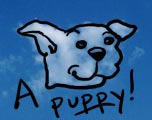
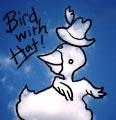
It is a beautiful Tuesday morning and I am sitting at home... sick.  Instead of wasting my day, I decided to try to post another blog in between sneezes.  Since I discussed the book Little Cloud  in my last post, I thought I would discuss It Looked Like Spilt Milk this time around.  I am also "killing two birds with one stone" since I am planning on using this book tomorrow with our little pre-K group. These books go well together since they both visit the idea of cloud shapes.  The main difference is that "spilt milk" story has more shapes to look at and identify, and it doesn't tell you it is talking about clouds until the very end of the book. If you are not familiar with this book you can check out the youtube link below to see a video of it being read.

Our pre-k group consists of 3-4 three year old boys with communicative disorders. They are high energy kiddos. Our main focus with these boys is teaching them how to interact appropriately with one another: sharing toys, playing together, requesting items (instead of grabbing out of the other child's hands), waiting, taking turns, sitting in a short circle time (without hitting, kicking, getting up, etc.), and attending/participating in the story time.  So I will choose some of the easiest activities that will work with short attention spans.

Here are some of the targets/goals that can be readily pulled from this book:
  • Perceptual skills: Let the kids look at the pictures and guess the shapes.  Most of the shapes will be easy to guess.  Add to this, if desired, by making your own additional shapes out of tagboard or felt pieces.  Can use a grab bag to pull out shapes and decide what they might be.
  • Vocabulary:  Naming the items in the book or game (above).
  • Categorization:  Group items - What animal shapes were in the book? What food shapes, etc?
  • Articulation:  /l/ sound - "looks like".  Any sound can be addressed if you add an appropriate carrier phrase.  You could also follow up the book by having the children make their own take home books and add the criteria that all of their cloud pics contain their target sounds. (Ex. /s/ blends - skate, skunk, spider, snail, smoke....). They can practice in single words by naming pics or in sentences by inserting the target into the repetitive text. A fun oral motor game (found in the Preschool Express link below):  Use Straws and cotton balls to play a game of "blowing the cloud around the table". (Or, if you are really brave, blow white paint around on blue paper).
  • Repetitive text / Verbal expression:  "It looked like a (car) but it wasn't a (car)."  This allows the child to fill in the new word in the first and/or second slot, similar to an early cloze exercise.  It also makes it easier for the child to learn the carrier phrase which is actually a compound sentences 10 words in length. 
  • Grammatical skills:  Highlight (say with added emphasis) any grammatical target needed: 
                Articles:  a car.
                Pronouns:  it
                Past tense verb:  looked, wasn't
                Negation:  was not - teach about negation
                Conjunction: but - introduce "but" as a contrasting idea. 
                Temporal concept / adverb: Sometimes - can discuss the difference
                    between "always" and "sometimes" in the context that the cloud
                    changes shape.

Art activities:
Tear paper into shapes.
Glob white paint on paper and see what shapes you end up with.
Glob white paint on blue paper, fold and decide what shape emerges.
Shaving cream paint:  One of my new favorites!  Mix equal parts shaving cream
   and Elmer's glue, stir, and paint.  Dries like a white puffy paint.  Great for clouds.
   Can also do the folded paper trick with this.
Stamping clouds:  Use large stampers (I know have these somewhere) and use white
   paint to stamp shapes onto blue paper.
Tracing shapes:  Best for older kids.  Trace around tagboard or other shapes.
Cotton Balls:  Can fill in the shapes with cotton balls.

Sensory Play:
Shaving cream:  Use bare hands to move shaving cream into shapes. Change shapes  
      into other shapes.
White playdoh or clay:  shape into the book shapes.
Finger paint white shapes.
Pull batting or pillow filler material into cloud shapes. Can even glue onto tag.
Pinterest: One of my friends pinned this recip e and it looks perfect to go along with this book.  Use 8 cups of flour mixed with 1 cup of baby oil. Makes a really soft "moon sand" for sculpting clouds and such.

Songs:
The Wind Moves the Clouds  (tune of "The Farmer in the Dell")
The wind moves the clouds,
And when it does they change their shape,
The wind moves the clouds.

Clouds are Floating  (to the tune of Frere Jacques)
Clouds are floating, clouds are floating,
Up so high, up so high,
Floating up above us, floating up above us,
In the sky, in the sky.

CLOUD RIDDLE

What is fluffy?
What is white?
What can you see
When skies are bright?
What can float?
What brings rain?
What may be higher?
Than a bird or plane?
Say it loud:
CLOUD!

* You could also make up riddles about the shapes:
What is furry?
What is white?
What has long ears?
What can hop?
RABBIT

Science: Make a Cloud
1. Need hot water (not boiling), glass bottle, thin piece of cloth, rubber band, crushed ice.
2. Pour hot (not boiling) water into a glass bottle. When the bottle becomes hot, pour out all but one inch of water.
3. Stretch a thin piece of cloth over the mouth of the bottle and fasten it with a rubber band.
4. Place crushed ice on top of the cloth. Have children observe the cloud that forms as the warm air meets the cold.

Links: Check out the links below for more great ideas.

youtube video story

Preschool Express Cloud Theme

Story patterns at Kidzclub.com

Weather Wiz Kids info about clouds

Clouds Power Point Displays for those who really want to dive into clouds with older kids.

Wednesday, April 18, 2012

Little Cloud by Eric Carle

I used this book again this past week.  Although I included it in my blog about Spring books a year ago, I think it is worth having its own forum here.  This is another perfect book for this time of year.  It is the story of a little cloud that drifts away from the other clouds and plays around by changing into various cloud shapes.


Lessons I have pulled from this book for my speech therapy clients:


Articulation:  Good book for working on  the following sounds
  • /s/ Use the carrier phrase "I see..." to identify cloud shapes
  • "sh" shape, shark, sheep, carrier phrase "______ shape"
  • /kl/ cloud, clown, carrier phrase "cloud is a ________"
  • /l/ carrier phrase "Little cloud is a _______"
Language:
  • Vocabulary
  • Answering questions: What is it?  Why did he turn into a sheep? (because he saw sheep in the field)
  • Sequencing: First he turned into a sheep, next he was a ....
  • Verbal expression: Retelling the story.  This would be a good time to use blue paper and white chalk or crayons, or white paper cut outs to reconstruct the story into a take home book for practice with targets. 
  • Narrative Development:  I love to use spin off stories that follow the original structure but with the child's own ideas of cloud shapes and why the cloud chose that shape.
  • Sentence structure:
            Pronouns: He/She
            Linking Verbs:  Cloud is a _______.
            Past tense verbs:  Cloud turned into a ________.

Cognitive/Perceptual Skills:
  • Recognizing cloud shapes.  What a great task for flexible thinking!  Here is a wonderful website (brucecvanpatter.com) that helps even the poorest at this task.  Scroll over the cloud and a drawn outline appears to help the viewer perceive the shape.  The fun thing about this is that once you see the line drawing, it is much easier to discern the shape in repeated attempts with the help.  I took this idea and located cloud shapes on Google Images which I then printed.  I placed two pages in clear page protectors (front and back) and used a sharpie to trace around the images onto the protector (works as a clear overlay).  With younger children we first view the pics with the overlays.  Then we view them again removed from the protectors/overlays to see if they can still find the images.  Older children can do the same process in reverse; guessing first then seeing the overlay added.         
                                  
Sensory Activities (Art):
  • Chalk on blue paper to draw shapes
  • White finger paint on blue paper: Draw cloud shapes or create whole pages of white textured painting to dry and cut out into cloud shapes (Eric Carle style).
  • Shaving cream mixed with white glue will dry into puffy paint clouds.
  • Torn paper clouds
  • Cotton ball clouds
Snacks: Whipped cream, marshmallows, cotton candy, meringue cookies, cream cheese... think white and fluffy.

Thursday, April 12, 2012

The Very Hungry Caterpillar

This is a terrific book to use for a Springtime theme. Here are some of the language development concepts I have pulled out of this book:
  • Sequencing events: first, second, third, next, last...
  • Counting 1-5
  • Learning days of the week
  • Life cycle of the butterfly: Get a butterfly house, find or buy some caterpillars and watch the life cycle as they grow
  • Concept "through": I made large versions of the fruits in the story and cut a hole in the middle of each one.  I use a plastic caterpillar and have the children pass it through the hole along with the story.  A fun follow up activity is to play with a fabric tunnel and crawl through it.
  • Basic sentence structures: It eats..., it is eating...,  it ate..., he/she, etc.
  • Food groups: Fruits, Sweets, etc.
  • Articulation: multi-syllabic words, medial sounds, any target when using an appropriate carrier phrase.
  • Expressive Language: Retell the story with props such as plastic caterpillar, butterfly, or felt board pieces.  A good activity would be to use some of the printables available online to make a take home book for the children.
  • Arts & Craft activities are unlimited. Check a few of my links below or simply Google a few.
  • Snack ideas:  Make caterpillar shaped foods.  Pinterest is a good source for these.  Children with ASD are especially picky eaters and this might be a good time to attempt to have them pretend to be the caterpillar and nibble on the foods in the story.
There are tons of online resources.  Here are a few that I have "mined".
Pinterest has a wealth of treasures for this book as well.  Just go to the search bar and type in "very hungry caterpillar" and tons of great activities will appear.

One of the best activities we ever did (think I will do it again this year) is to actually raise some caterpillars until they become butterflies.  I purchased a net house like this:

More info on ordering and raising caterpillars can be found here:
and here:

Here is a great video of the life cycle of a Monarch butterfly

It is always fun to follow up a story with other theme related books, fiction and nonfiction.
          

And, if seasonal, why not take a little walk outside to see if you can find a caterpillar or a butterfly in your yard.

Tuesday, March 27, 2012

Easter Egg Hunt Fun

We love those plastic Easter eggs at The Speech House.  There is not a more versatile and inexpensive therapy tool to be found!  I have been known to pull them out anytime during the year for a quick and fun therapy lesson.  Most of my ideas are pretty intuitive to anyone who has worked as an SLP for awhile.  But, if you are new, or a parent, who needs some ideas to get you started, here are a few ways to use them:


1. Classic Easter Egg hunt:  Fill eggs with candy, small toys, stickers, etc.  Hide them and have clients find them.  When it is time to open them, require a speech or language target such as a carrier phrase or sentence.  If working on /f/ sound, it could be, "I found a blue egg."  You can figure out a phrase for any target to require articulating prior to opening the egg. 

2.  Fill the eggs with small toys or pictures that represent speech targets: /b/ - bee, ball, baby, bug, bell, bow, etc.  After eggs are collected, open them up and tell what was found inside, make sentences with the targets, tell something about the item (to make a language task). 

3.  Get duplicates of all kinds of decorated eggs and work on matching "same" eggs.

4.  Have a variety of eggs to work on descriptive vocabulary.  I have eggs that are shiny, sparkly, pearly, spotted, striped, flowery, small, medium, large, etc.  I will ask the child to give me a sparkly orange egg and I will then fill it and put in the basket (receptive language).  Or I will have the child tell me which egg to choose (expressive language).

5.  I will hide the eggs completely out of sight and the child will have to follow my directions to find them.  This is especially good for working on positional concepts:  Look "behind" the desk, or "under" the pillow, or "between" the desk and the file cabinet...

6.  Play "hot" & "cold" to teach an abstract way of finding eggs.

7.  For social skills work, play "follow my eye gaze to find the hidden egg". 

8.  For older children, have "treasure hunts".  Follow clues to figure out where clues are hidden.  You can use riddles or descriptions:  "I am hiding in a dark and cold place.  The light comes on when you open the door.  I am beside some milk." (Refrigerator)

9.  For Social Groups, have the group work together to decipher the clues or have one child find one part of the clue and then they have to share their clues to figure out the location of the egg cache.  One way to do this is to write or draw the final location on tagboard, cut up into puzzle pieces and have each child earn a piece of the puzzle.

10.  For higher level students, let them figure out hiding places for eggs.  Then they have to write their own clues.  This can be tricky for some kids because they may have trouble with being too concrete or being too vague with their clues. 

I will add more ideas as they come to mind.  Readers please share your ideas too by adding them in the comments section.  I know there are many other ideas out there!

At The Speech House we are planning on having lots of egg hunts next week.  Since it is usually more fun to do in groups, we plan on having each therapist bring her client together with other clients to join in small hunts outside. 

Friday, March 23, 2012

ST & Games: Cadoo by Cranium

Good old fashioned board games are excellent speech therapy tools. They can target many language and processing skills, they promote communiciation between players (unlike video games), and they add an element of FUN to the hard work of remediating speech and language deficits. Over the next few posts, I will be discussing a few of my favorites.

A good rule of thumb when using board game is to "adapt" the game to the child. Simplify game play or rules as needed. Quicken the pace of the game before they tire of it. Assist the child whenever necessary to ensure success. Do Not le...t the child win everytime (tread carefully here because the goal is fun but we do not want to create a monster that meltdowns as soon as someone else pulls ahead...little doses of reality sprinkled in sparingly...)

Cranium games are AWESOME! Cadoo is geared toward children aged 7+. I always recognized the language development connection but there is also value in this game for children with Autism spectrum disorders, especially high functioning Autism or Asperger's. These children often have diffiiculty with inflexible thinking, pretend play skills, sensory issues (clay sculpting), processing skills that require thinking outside of the box, etc. This game taps into social skills development in the simple interaction of game playing: turn taking, reading and understanding directions, reasoning strategies for winning, blocking the opponent, and the use of the sand timer (which you may need to play without at first) exercises the childs ability to work on a deadline (instead of being a perfectionist) and to deal with anxiety. The specific skills addressed with the card decks are addressed below.

Double Meanie cards: This task exercises flexibility in thinking by helping the child realize that a word can have more than one meaning.
Think of word that means both things:
   - The outside covering of a tree trunk.
   - The sound a dog makes.
The child uses red glasses to read the hidden answer: "Bark"

ACE OBSERVER:  Cards contain a close-up picture such as the #2 on a yellow pencil.  The child must tell what it is a part of. Although children with Autism disorders have stronger visual skills they often have difficulty with processing partial information; abstract ideas rather than concrete ideas and understanding inference.

CODE CRACKER: Another task for processing inference. Card contains a picture code such as an EYE + 2  Drinking GLASSES = "eye glasses".  This task can be difficult for a concrete thinker.
 
FAST FIND: Find 2 items within the minute: something shiny and something that starts with "C". Again a processing activity that requires quick thinking and looking around the environment and noticing specific items.
 
CAMEO: These cards require the player to act out (pretend / conceptual play) an item or activity. The child has to work to develop these skills so the other player can successfully guess and they also have the opportunity to observe the other players and learn how to clarify their own portrayals.

CLOODLE: Draw a picture for the other player to guess within one minute...use of the timer requires the child to move beyond the need of perfectionism (no time to erase and redraw). This may too difficult at first so may need to play without the timer. Drawing is also another task of conceptualizing something concrete (abstract representations through art).

SCULPTURADES: Using clay to form the object on the card. Once again, like Cloodle, a task of conceptualization. It also has a sensory processing component in handling the clay.


Playing this game with a child with a language disorder can be done with the game as a whole or you can pick specific cards to work on each skill at a time and then later combine the cards to work with changing requirements. For the children with Autism Disorders, I recommend addressing one skill at a time because each skill set will likely require much effort game play should always be fun and not overly effortful. If the child is learning while having fun, then the task is a success!

For more games on my favorites list go here.