Saturday, February 9, 2013

REVIEW: Social Skill Builder App

I was honored to have been invited to review this app. I had already been using the Lite version and had purchased two of the additional modules, so I was very happy  for the opportunity to get access to the full version.  This app puts appropriate clips of video modeling examples literally at your fingertips: iPad => fingertips! :-).  There are four settings in these apps: preschool, elementary, middle & high school, and community.  In the LITE version ($2.99) there is one module for each setting.  More modules can be purchased for $1.99 each.  The FULL version ($12.99), comes with all 10 of the currently available modules.  Future modules will be $1.99 additional purchases.  The idea of being able to purchase modules individually is an attractive option for someone who does not want to plop down $60-90 for a full app or piece of software.

What I like about this app: It gives good examples of expected and unexpected behaviors that commonly occur in these settings.  Each module presents various clips of situations (Table Talk - cafeteria scenes, etc.) that are likely to occur in that setting.  Each clip is followed by 1-2 questions to check for understanding of the concepts.  A reinforcer is played for correct answers.  The reinforcers are appropriate for young kids. Each module displays various problems, examples, and expectations that might occur in that setting.

I have used these modules in working with both individual clients and in some of my small social groups.  We watch a clip, answer the questions, and often will launch out into further discussion of our own experiences with similar situations.  The clips fit nicely with social skills training ideas.  I look forward to new modules, I am sure I will be purchasing them all.  It is a great and easily accessible resource.  It is not terribly expensive. Everyone likes those kinds of resources!

Here is a link to the website for more details: Social Skill Builder App

Sunday, February 3, 2013

Bullying, Teasing, or Social Skill Deficit?

I had an interesting experience in a group this week that has left me processing and problem solving all weekend.  I had a group of three upper middle school teens who meet infrequently, it has been several months since our last meeting.  One of the students, who I thought was doing well generally, made a series of unkind remarks to one of the others; these two had been grouped together formerly. The remarks included: "we don't like each other, why are you stuttering, you are stuttering again" along with some inappropriate laughter. Though the student being referred to did not appear to take offense, it was clear that the remarks increased the stuttering behavior and made the student uncomfortable.

My first response was to "shoot daggers with my eyes" at the student making the remark the first time (not surprisingly, this made no impact whatsoever).  My next response was to quickly verbally reprimand the student: "that is a very inappropriate thing to say...".  My third response was to shut down the conversation and deliver a mini-lecture on the importance of not teasing or making negative remarks about others.  The offender took offense at being reprimanded and became defensive.  The offendee seemed unphased by any of it.  After the session, I spoke with the offendee and  mom to apologize for the incident and to vow I would speak with the other student to get this behavior under control.

Here is the background: Both  have Asperger's.  Both tend to enjoy the sarcastic side of humor.  Both like to get attention, usually in a sarcastic manner. Although, the offendee was behaving this day.

The Offendee did not seem phased by the remarks, except for having more trouble being fluent.  Although it was "said" it did not bother the Offendee but it clearly affected the speech.

The Offender tends to say what is thought.  What was the motivation behind the remarks?
  • Desire to "one-up" the other and be "on top" socially with a new member in the group.
  • Dislike of the other student with no attempt to hide it.
  • Maliciousness, bullying
  • Genuine curiosity about why the student stutters and inability to censor  words into a respectful dialogue or to understand that one must filter ones comments. (This did not appear to me to be genuine curiosity... but I could be wrong as it is often to tell with these kids what is really going on).
My dilemma:  How to approach this issue?

Did I ever say these groups were easy?  They are most definitely the hardest thing I have ever done...

My plan:  In our individual session, I will bring this incident up for discussion.  We will do a Social Behavior Map (from Michelle Winner's Social Thinking) and dissect the Offendee's responses to the situation.  I also found a helpful tool at Jill Kuzma's site: Analyzing a Teasing Situation and Types of Teasing Flowchart.  We will use these to try and help the Offender process the effect of words.  Then we will discuss what is not appropriate in commenting to others and the difference between harmless teasing and harmful teasing. I pinned some resources on my Pinterest Board for Social Skills that might help guide this discussion: Understanding Playful Vs. Hurtful Teasing, Teens Talk about Bullying, Normal Conflict vs. Bullying. This last link seems to be for younger kids but it might help illustrate the point of Hurtful Words and how they cannot be taken back: It involves crumpling a picture for each hurtful remark and then illustrating that even when we try to remove the hurt (straighten out the paper) the scars (wrinkles) remain.


We will see how it goes... If anyone has other suggestions, I would be happy to hear and consider them.

from Blog Hoppin'

Friday, January 11, 2013

SNOW... SNOWMEN...

Winter is here... although it was near 70 degrees today in Tyler.  However, we actually had snow on Christmas day for the first time that I can remember in East Texas.  I am sure it has happened before but it is RARE.  Nice thing about snow in this part of the world is that is only lasts a day or two and then it goes away.  Just enough to make it fun and magical but not troublesome.


The office is all decorated in snowflakes, icicles, and snowmen... a contradiction to what the weather is like outside.  So my thoughts turn to winter themes.  I will try to not repeat my previous posts: Fun Winter Books & Let It Snow.

I have discovered a few new crafts this year that I hope to try, mostly thanks to Pinterest:

 http://whatsfuntoday.blogspot.com/2012/01/doily-snowmen.html


New Books (new to me anyway):

Snow Globe Family:  This book is about a family living in a snow globe (that mirrors the family in the book).  The snow globe sits on a shelf ignored by all in the big house except for the baby.  The little family (in the snow globe) longs for someone to shake the globe and create a hill for sledding.  Finally the baby gets the globe and shakes it for them.  It has plenty of snow related activities in the book: snowmen, snowballs, snow angels... But more interesting is that it can launch the discussion of "what if I were in the snow globe".  My plan is to use the clear plate snow globe activity and have the kids draw a picture on blue paper of themselves (pictures) in the globe.  Another variation on the craft would be to glue two clear plates together with a snow scene inside.  I will address any goals the kids may have in therapy: articulation, language, grammar, sentence structure, written expression, story telling, etc. This activity is particularly suited to verb tenses. 

It is also a good activity for those working on Social Thinking (Michelle Garcia Winner) activities involving "wondering" about things (developing curiousity, speculation, empathy).  It can also be an activity on "perspective" and "empathy". 
  • How would the world look to someone in a snow globe?
  • What would it feel like to be in the globe?
  • How did the family feel when the baby shook the globe?  Were they afraid? Why not?"                                         

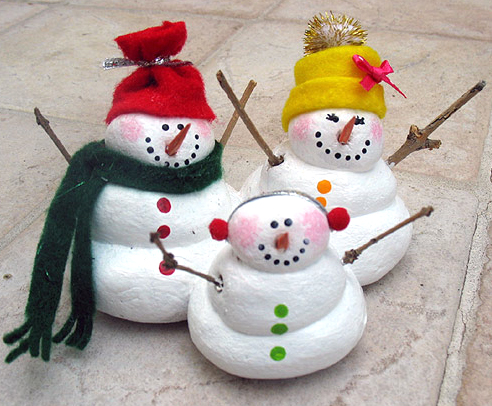
Snowmen at Night:  This book examines the secret life of Snowmen, who come alive at night and have all sorts of fun adventures.   Crafts: any snowman craft would be great.  There are tons of snowmen crafts.  Just pick your favorites: paper plate, dough, cotton balls in bottles, white paint, snow paint (shaving cream and paint), floam, doilies, marshmallows.... Crafts are great activities for following directions, verbal expression, processing, etc.


This book would be great for launching more perspective taking discussions:
  • What does the boy see in the morning? (disheveled snowman)
  • Does he know what happened to the snowman? (no, it happened when he was sleeping)
  • What might the boy be thinking?
  • What might the snowman be thinking? 
  • How do the snowmen feel?
  • What else could the snowmen do?
  • Do you think snowmen should be drinking hot chocolate? Why/why not? What else could they drink? (milkshakes because they are cold...)

Monday, January 7, 2013

Behavior Management 101: Topic 6

Topic 6: Behavior Management:
Social Skills Groups

In my small groups, which are social skills groups, I see from 2-6 students at a time.  Since these kids are there for social skills issues, behavior management is a primary focus.  I rely on the work of Michelle Garcia Winner and her Social Thinking curriculum.  I use a combination of the before mentioned approaches including a heavy dose of fun and humor.  An invaluable tool has been the use of her approach which I call "Thought Marbles" because I use marbles instead of sticks.  Since this post is a day late and I have already written a post on this subject, I will simply post a link to that article: Thought Marbles.


Saturday, January 5, 2013

Behavior Management 101: Topic 5

Topic 5: Behavior Management: Give the Child Some Decision-Making Power

We all know that anytime we are "invested" in something, we work harder at it.  I use this principle in my private practice.  If I have a family who cannot afford services/copayments, I rarely waive them completely.  I realize that if the family is having to pay $5-10 dollars per visit, they have an investment in the process and will work harder to follow through on practice and recommendations.  If I invest my time, energy, or money in a project, I will take a greater interest in it.  And so on...

Well, the same is true of our clients/students.  If we give them ownership in the process, they will be more engaged in it.  If they are engaged in it, they will work for success; although their definition of success may not match ours.  We want achievement of goals, they may also want this but they will most likely have shorter goals such as earning a reward or play activity.

There are many ways you can increase their investment into the process. Here are a few ideas (pick one to use, not all; that would be too much "power"):
  • Allow them to pick their reward; this is best done before the session begins so they know what they are working toward (the carrot and stick approach).  I don't use a "reward" system often, only as needed.  For my clients, if a game or toy is not used during therapy, I will generally let them play briefly at the end. 
  • Allow them to decide on the rules for earning the reward (within reason and based on already established rules; i.e. do this only after they understand "how things work" in therapy).
  • Allow them to choose their desired activity or game to be used throughout the therapy session.  I usually give them a closed set of choices 2-4. Otherwise you may spend the whole session "shopping" the room.
  • Allow them to judge your performance: They play "speech teacher" and you play a client.  You produce their targets and throw in a few mistakes so they can judge your performance. (This also helps them practice Auditory Discrimination/Processing).  They love correcting you for a change.
  • Allow them to judge their own performance on targets (remember: the behavioral issues can also be important targets). This is especially helpful for older clients and those working on carryover skills.  You can even let them record data, with your supervision.
  • Allow them to decide on what homework they need to do.
Giving them some decision making power can go a long way towards making them be engaged in the therapy process. If they are engaged, they tend to behave appropriately.

Friday, January 4, 2013

Behavior Management 101: Topic 4

Topic 4: Behavior Management:
Heap on the Praises

Encouragement! Be sure to give frequent praise and lots of high fives or their equivalents.
I googled for some praises to offer and found articles about the danger of over praising kids.  But I think that applies to life in general.  We are dealing with intense 30 minute therapy sessions in which we are expecting a child to learn a task that is difficult for them.  We are asking them to modify a behavior that has been established for some time.  In learning something that is difficult, we need all the encouragement we can get.  So, it is important to praise the child's efforts to keep them motivated to keep trying.

What do you do when the child is not being particularly successful?  (Those kids who just struggle to produce the /r/ sound...). Give "constructive feedback" along with praising what they did correctly. "You did a great job of not rounding your lips.  Let's do it again and this time pull your tongue up tighter."  Or, "I can tell you are giving it 100%." And, "You almost got that one, try it again".  Correct the child's errors in a positive way.  Too much negativity will shut a child down quickly.  (Just think of the last session you had when you were in a bad mood or did not feel well. It seems when I feel terrible the children behave terribly.  They pick up on our moods.) This does not mean you praise a child falsely, because they can see through that.  Even if the child is struggling with the objectives you can praise their efforts. 

You can also praise the child for other things they are doing well during the session.  Sometimes when they just can't "get it" you still need to help them feel positive.  Here you can comment on how they are being persistent, hanging in there, etc.  You can also instill postive self esteem about other skills they have: "You did a great job coloring that page." Or, you are so good at this game. You always figure it out before I do." Or, "I like the way you waited for me to give you the cards today." (or whatever behavioral issue they've been dealing with). 

In my googles I found an interesting article about how to deliver praises.  It said it is better to praise efforts than attributes.  Instead of "you are so smart", say "You are doing a great job figuring out how to do this." Studies have show that children work harder when effort is praised.  If you are praising attributes they may scale back on accepting new challenges in order to protect the status of the attribute. See article.

Some ideas for encouraging:
  • For doing well on targets: Good job, That's it!, Super, Perfect, Terrific, Awesome Dude, Fantastic, Way to go...
  • For trying:  Good try, That was better, I like the way you are working so hard, You almost had it, That was so much better!
  • For good behavior or other skills (especially when they are really struggling with tasks, find other positive things to praise): You colored that so neatly, your color choices are so creative, Are you an artist?, How did you learn to do that?, You are better at this game than I am...
  • Physical praises:  Cheer, Clap, Use those fun hand clappers you can find at a party store, High Fives, Surprised / Excited Face, Big big smiles
  • Use animated voice with lots of excitement. If you are excited and engaged, they will be also.
  • Use humor whenever you can... kids love it!

Thursday, January 3, 2013

Behavior Management 101: Topic 3

Topic 3: Behavior Management:
Modify Targets to Facilitate "Success"
When a client's troublesome behaviors escalate, I have to step back and look closely at the situation.  What I often realize is that the targets are just too difficult for the child.  It may be that the child has not reached the maturity required for a specific target or maybe they just don't have the ability to focus long enough to do the required work to achieve it.  This is one of the reasons it is important to consider developmental norms. I have no qualms about addressing /r/ in a four year old, if he is ready for it.  Many four year olds produce the /r/ just perfectly.  How do you know if it is an appropriate target?  Can he produce the sound in any of the various /r/ forms? Is he stimulable for the sound?  If I choose this target and work on it for a couple of weeks with no real progress and an escalation of behavioral problems, it is most likely that the child is simply not "there" yet and that target should be delayed.  It also may mean that you have advanced too quickly with the target and it requires too much concentrated effort.  Scale back to a simpler level (auditory discrimination, sound in isolation, or consistent placement in a word).  If you are trying to move a child forward from an area of mastery to the next level, don't just jump 100% to the next target.  Continue to practice the successful targets the majority of the time and throw in a difficult one every 4th, 5th, or 10th trial. Make sure the child is experiencing 80% success on target trials at any given time.  The success gives them the confidence to try the harder targets 10-20% of the time without them feeling so challenged that they shut down. I have often described therapy (especially speech work) as a "dance". You lead and let them follow, you slow down if they are mis-stepping, you give them the lead sometimes, you glide along easily together, then you push them along with a more challenging step, then you fall back into the easier gliding along... like dancing back and forth. A basic principle of behavior modification is to build on success.  When teaching a new skill, you must always stop at the point of error and go back to the last point of success. You then facilitate the next step by providing maximum necessary support and assistance for the child to achieve that step.  As the skill improves, you fade the support.

So if you have a client who suddenly is misbehaving, take a look at what you are asking him to do and whether he is ready to do that yet.
                                                                                                     Dance pair animated gif