This winter I am revisiting my old posts for therapy ideas and I am updating them with links to other SLP posts and Pinterest ideas. I am trying to give proper credit as I make these additions: I provide a link to the original post so please be sure to click on those links so you can see the wonderful sites with all of the creative ideas. These posts are primarily a place where I can catalog sites for quick reference when I need to find them. Follow this link to see my previous Winter posts.
Sunday, January 26, 2014
Winter Revisted
This winter I am revisiting my old posts for therapy ideas and I am updating them with links to other SLP posts and Pinterest ideas. I am trying to give proper credit as I make these additions: I provide a link to the original post so please be sure to click on those links so you can see the wonderful sites with all of the creative ideas. These posts are primarily a place where I can catalog sites for quick reference when I need to find them. Follow this link to see my previous Winter posts.
Saturday, December 7, 2013
Santa Mouse
Here is a youtube animation of the story.
This book can be used in therapy in many ways: using the story to pull our articulation targets, language goals, and extension activities.
Articulation: Obviously this is a great book for /s/ targets: Santa, Mouse, Christmas... but any sound can be targeted with a little creativity by pulling target words out of the story or using carrier phrases with the specific target.
Language:
- Vocabulary: discuss new words as they are used in the story. Example: Mouse's imaginary friends
- Concepts: Locations - Use mouse and cheese cut outs to place in various positions on a Christmas tree picture. This can be done as a receptive or expressive language activity.
- Sentence structures: Develop sentences to target whatever sentence structure to be practiced. Make a mini book for the child and glue these sentences to each page. You can also cut up the sentences and have children unscramble them.
- Verbal Expression: Re-telling the story.
- Comprehension / Inferences: Discuss whether the "friends" are real or imaginary. It is amazing that many children miss this concept or fail to fully understand it.
- Social: Discuss how the mouse feels "lonely" with no friends, how thoughtful he is to want to give Santa his cheese, how his behavior makes Santa feel happy, which results in Santa befriending him.
Crafts are always fun to do and great for working on following directions and processing information. Or, you can just use them as a motivational activity with the child earning pieces of the craft to complete it.
- DLTK is always a favorite resource for kid activities and she has many "mouse" themed activities. One of my favorites: Christmas hat template to attach to Mouse.
- DLTK's Mouse Coloring Pages
- Candy Cane Mouse
- Cheese and pom pom mouse: Cut a small triangle from a yellow sponge for the wedge of cheese.Glue a grey pom pom to the sponge for the mouse's body.Cut a nose, ears, and eyes from felt or foam, (or use wiggle eyes). Glue them in place.For the mouse's tail, cut a 2-inch strip of chenille stick or felt. Glue one end under the back of the mouse's body.
- Swiss Cheese Felt ornament:: Cut holes in yellow felt to hang on tree (instead of real cheese).
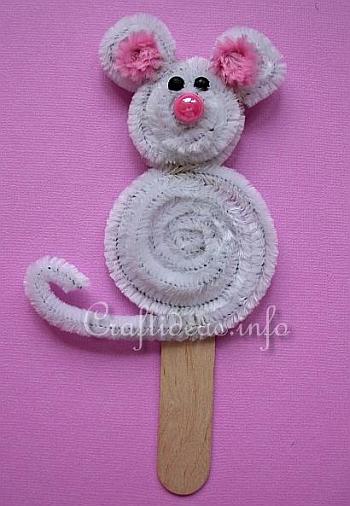
- Chenille Mouse:
- Chocolate Kiss Mouse
- Mouse in a Tin: You can simplify this craft by making a flat felt mouse to put in the tin or a matchbox.
- Paper Cone mouse
I have uploaded a couple of documents:
- Santa Mouse story (since the book is apparently out of print... but you can find used copies on Amazon and Ebay).
- Santa Mouse tradition tips.
Saturday, April 20, 2013
Advice to new SLPs: ATTITUDE
This blog post is dedicated to the many young SLPs and Assistant SLPs out there just starting up their careers.
You have your basic education (whether it be at the Bachelor's level or Master's level), now comes the time for the "real" education. Don't get me wrong, your academic education is vital. But, as we all know, the real learning comes in the application of the knowledge and transforming the knowledge into a real skill.
Here are some very basic suggestions that I give to new SLPs who work for me. These suggestions are from the perspective of an SLP working with children but most are applicable across settings and clients.
Attitude with child/client & parents - attitude is important; try to be...
• Cheerful – Always look happy to see the kids and parents: People want to feel you are personally interested and invested in them. If you looked bored, uninterested, or distracted, they will not develop much confidence in you as their therapist.
• Animated – With kids you need to use animated expressions to hold their interests and have Fun! Even if you feel horrible, you have to act happy. This may not always be possible, but you should do your best to breathe life into your therapy sessions. On the flip side, don't go over the top and appear fake or contrived. Also, animated does not mean "loud". Some children respond better to a calm therapist (especially hypersensitive kids). You can be animated and calm at the same time by using facial expressions that show excitement about what the child is doing.
• Positive and encouraging – This suggestion can be applied in several ways:
- Condition/Diagnosis: Even if you suspect something is really wrong, choose your words carefully. Bad news is best broken sensitively and giving parents time to process the information. If I suspect a child has Autism, I will mention "red flags for a developmental disorder" and recommend the parent goes to see a specialist who can diagnosis what is going on with the child. This gives them time to digest the information, often coming up with the suspected diagnosis on their own. The only thing worse than "dropping a bomb" on a parent ("I think your child is Autistic.") is giving them the wrong information. Developmental delays in young children can be something other than what we initially think they are.
- Corrections: When a child makes errors, do not be overly critical. If they miss something, you say “Great try. Let’s do it again.” Do not say, “No, that was wrong. Do it again.” Don't focus solely on taking data and marking errors. Remember that the goal is to make them successful and it is your job to get them there.
- Behavior: Often you will see kids who have behavioral problems or who act out for a variety of reasons. (see blog post: Behavior) When you visit with the parents, don't stand there and report every negative behavior their child committed. When that child is with you, it is your job to figure out how to achieve cooperation; that is a big part of our job. If you must enlist the help of the parent, do it in a constructive way, not a destructive way. Parents of difficult children already know their child is a "handful". They will be highly appreciative of a therapist who can see their child's positive qualities (every child has some, you just may have to look extra hard to find them). Be sure to point out the good things the child does. When you speak of the behavioral problems, address them in terms of "how we can help the child" versus just complaining about the child. (Think in terms of "informing vs. tattling").
Monday, March 25, 2013
The Gruffalo & Social Skills
I admit I just saw the great post at playingwithwords365.com about speech and language activities to use with one of my favorite books, The Gruffalo. Be sure to hop over to the link and read her post... it is full of great ideas. At the end of the post I saw a "blog hop". I did not know what this was so I checked it out. It is a place to link blog posts of a similar subject. Since I love this book, I thought, "I want to be part of that!" I checked out the posts and most of them discuss this book or other books by Julia Donaldson. But, none of them seemed to touch on the "social thinking (R)" aspect of this story. This was one of my favorite applications of this story.

Spoiler Alert: Reading this post will give away the story, if you have not yet read it.
The story follows a little mouse who is approached by several predators while walking through the woods. This is no ordinary mouse, he is a very witty mouse who saves himself from becoming someone's dinner by using some clever tricks. This story can be used to teach the following social skills sets:
- Understanding the Perspectives of others: Mouse knows the others are thinking of "eating" him since they are natural predators. This idea can be used to address making "smart guesses" and using our brains to think about what we already know about things (prior learning).
- Deception: He rightly interprets their invitations to dinner as being deceptive ways of getting him to their homes. You may need to discuss this with the student to see if they understand this idea that though the animals say "for dinner" they mean as the "main course", not as a guest. (Multiple meanings/Hidden intentions). So many of our kids with social skills disorders are gullible or naive. This might be a good way of introducing "stranger danger" or helping them to learn that some people might be deceptive for one reason or another (bullies). They can learn to think about what they already know and make better assumptions about motives.
- Problem solving skills: Mouse taps into his prior knowledge or experiences (what he told the others about the Gruffalo and how they will react to seeing him) in order to escape being the Gruffalo's sandwich.
- Theory of Mind: This reminds me of the Sally Anne test; who knows what?
Does Snake know that Mouse knows he wants to eat him? (no)
How do you know this? (If he did, he would not believe the Gruffalo story).
What does Mouse know that Gruffalo doesn't? (animals are afraid of Gruffalo)
What does Gruffalo think, that is not true? (He thinks they are afraid of Mouse).
Why does he think this? (Mouse told him they were & the animals run away).
Other Speech Therapy Goals:
- Color the Gruffalo: This page can be used to process information from the story by recalling the colors of the Gruffalo parts or to follow instructions in coloring the page.
- Story Sequencing/Story Telling with pics from many of the resources.
- Learning descriptive words: wobbly, prickly... & other vocabulary: warts, tusks...
The official Gruffalo website: Interactive games, free cards to print, mask, finger puppets, recipes...
Itsy Bitsy Learners Preschool Pack: alphabet, numbers, cards...
tes connect: A teacher share site from the UK, where this book originates. Click the link and it will take you to a wealth of book activities and worksheets. You must join the site to access materials but it is free. Here a few of my favorites from this site:
- Thinking Hat Reading Questions: Problems solving, feelings, character, descriptions...
- PPT of Gruffalo descriptors
- PPT version of story with rhebus stories using picture symbols for Special Needs students.
- Story Wheel
Sunday, March 24, 2013
Emails: Permission to Share
I have two email accounts. My gmail account is rarely used since it got hacked awhile back and spammed a lot of people. Apparently it is the account linked to this blog...
I checked it the other day for the first time in a very long time and found several email requests to share materials from this blog site. So, I have posted a message to the right giving permission to do so. I am happy for anything here to be used as long as given proper credit. This can be done in several ways. Here are two ways I generally use: add the source's name and blog site or post as a link back to the original site (this also serves to drive traffic to that site).
Saturday, February 9, 2013
REVIEW: Social Skill Builder App
I was honored to have been invited to review this app. I had already been using the Lite version and had purchased two of the additional modules, so I was very happy for the opportunity to get access to the full version. This app puts appropriate clips of video modeling examples literally at your fingertips: iPad => fingertips! :-). There are four settings in these apps: preschool, elementary, middle & high school, and community. In the LITE version ($2.99) there is one module for each setting. More modules can be purchased for $1.99 each. The FULL version ($12.99), comes with all 10 of the currently available modules. Future modules will be $1.99 additional purchases. The idea of being able to purchase modules individually is an attractive option for someone who does not want to plop down $60-90 for a full app or piece of software.
What I like about this app: It gives good examples of expected and unexpected behaviors that commonly occur in these settings. Each module presents various clips of situations (Table Talk - cafeteria scenes, etc.) that are likely to occur in that setting. Each clip is followed by 1-2 questions to check for understanding of the concepts. A reinforcer is played for correct answers. The reinforcers are appropriate for young kids. Each module displays various problems, examples, and expectations that might occur in that setting.
I have used these modules in working with both individual clients and in some of my small social groups. We watch a clip, answer the questions, and often will launch out into further discussion of our own experiences with similar situations. The clips fit nicely with social skills training ideas. I look forward to new modules, I am sure I will be purchasing them all. It is a great and easily accessible resource. It is not terribly expensive. Everyone likes those kinds of resources!
Here is a link to the website for more details: Social Skill Builder App
Sunday, February 3, 2013
Bullying, Teasing, or Social Skill Deficit?
I had an interesting experience in a group this week that has left me processing and problem solving all weekend. I had a group of three upper middle school teens who meet infrequently, it has been several months since our last meeting. One of the students, who I thought was doing well generally, made a series of unkind remarks to one of the others; these two had been grouped together formerly. The remarks included: "we don't like each other, why are you stuttering, you are stuttering again" along with some inappropriate laughter. Though the student being referred to did not appear to take offense, it was clear that the remarks increased the stuttering behavior and made the student uncomfortable.
My first response was to "shoot daggers with my eyes" at the student making the remark the first time (not surprisingly, this made no impact whatsoever). My next response was to quickly verbally reprimand the student: "that is a very inappropriate thing to say...". My third response was to shut down the conversation and deliver a mini-lecture on the importance of not teasing or making negative remarks about others. The offender took offense at being reprimanded and became defensive. The offendee seemed unphased by any of it. After the session, I spoke with the offendee and mom to apologize for the incident and to vow I would speak with the other student to get this behavior under control.
Here is the background: Both have Asperger's. Both tend to enjoy the sarcastic side of humor. Both like to get attention, usually in a sarcastic manner. Although, the offendee was behaving this day.
The Offendee did not seem phased by the remarks, except for having more trouble being fluent. Although it was "said" it did not bother the Offendee but it clearly affected the speech.
The Offender tends to say what is thought. What was the motivation behind the remarks?
- Desire to "one-up" the other and be "on top" socially with a new member in the group.
- Dislike of the other student with no attempt to hide it.
- Maliciousness, bullying
- Genuine curiosity about why the student stutters and inability to censor words into a respectful dialogue or to understand that one must filter ones comments. (This did not appear to me to be genuine curiosity... but I could be wrong as it is often to tell with these kids what is really going on).
Did I ever say these groups were easy? They are most definitely the hardest thing I have ever done...
My plan: In our individual session, I will bring this incident up for discussion. We will do a Social Behavior Map (from Michelle Winner's Social Thinking) and dissect the Offendee's responses to the situation. I also found a helpful tool at Jill Kuzma's site: Analyzing a Teasing Situation and Types of Teasing Flowchart. We will use these to try and help the Offender process the effect of words. Then we will discuss what is not appropriate in commenting to others and the difference between harmless teasing and harmful teasing. I pinned some resources on my Pinterest Board for Social Skills that might help guide this discussion: Understanding Playful Vs. Hurtful Teasing, Teens Talk about Bullying, Normal Conflict vs. Bullying. This last link seems to be for younger kids but it might help illustrate the point of Hurtful Words and how they cannot be taken back: It involves crumpling a picture for each hurtful remark and then illustrating that even when we try to remove the hurt (straighten out the paper) the scars (wrinkles) remain.
We will see how it goes... If anyone has other suggestions, I would be happy to hear and consider them.
| from Blog Hoppin' |
Subscribe to:
Posts (Atom)